From the Pitch to the Brand: How Footballers Can Build a Commercial Legacy Beyond Their Playing Career
June 16, 2026
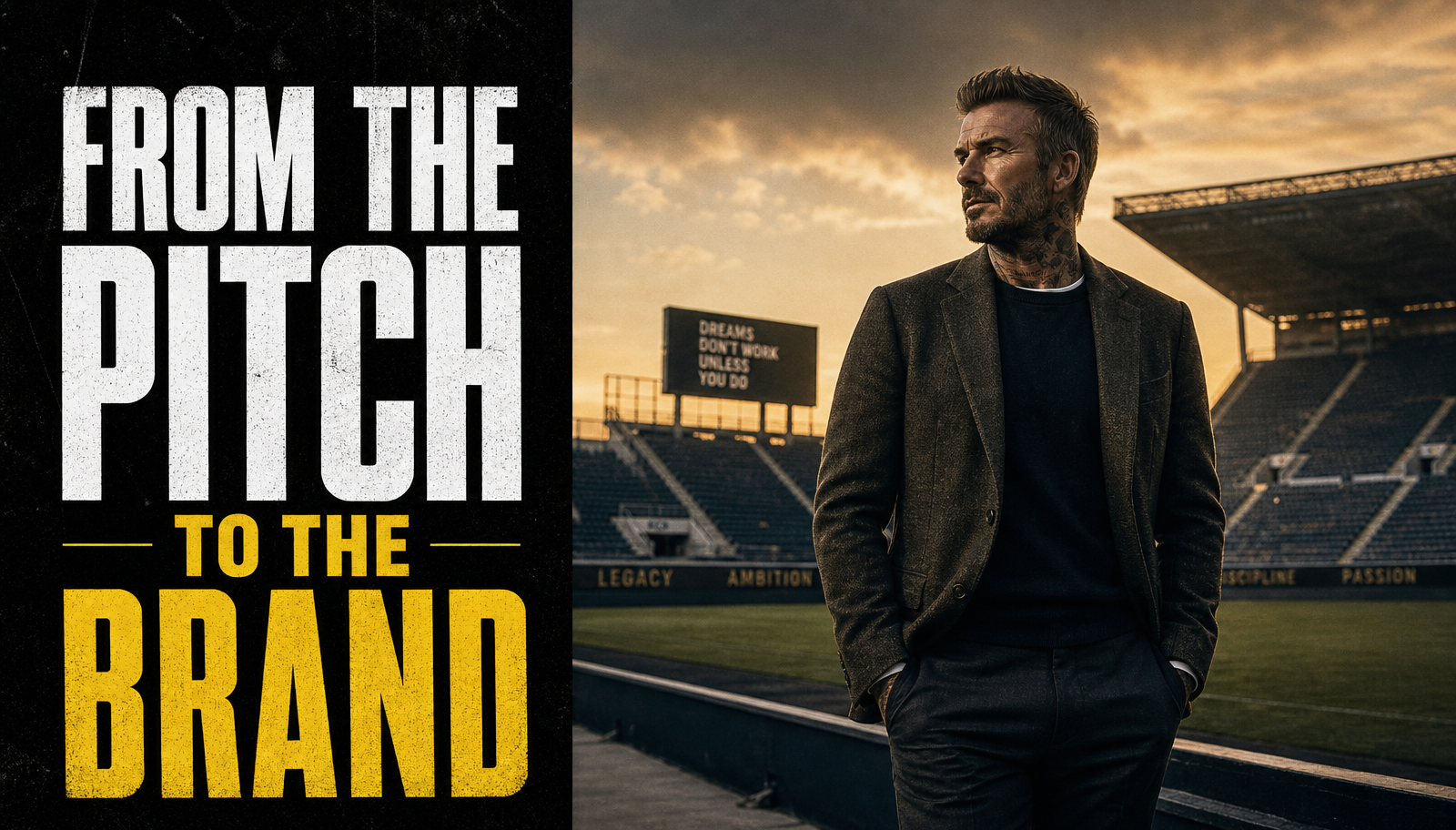
From the Pitch to the Brand: How Footballers Can Build a Commercial Legacy Beyond Their Playing Career
The average professional footballer retires before the age of 35. For most people, that would be the prime of their working life. Yet thousands of players each year walk away from the game with no commercial strategy, no personal brand, and no real plan for what comes next.
The ones who get it right do not wait until the final whistle. They start building long before retirement is even on their radar.
The Window Is Shorter Than You Think
A career in football moves fast. Injuries, form dips, managerial changes, a single transfer that does not work out. The variables are endless, and very few players have the luxury of a long, uninterrupted run at the top level.
That makes the window for building commercial value surprisingly narrow. A player who spends their peak years focused purely on football, with no thought given to their public profile or brand identity, will often find themselves starting from scratch at 34 or 35. By that point, the sponsorship calls have stopped, the social media following has stagnated, and the public has already moved on to the next generation.
Compare that with a player who invests in their personal brand throughout their career. They arrive at retirement with an engaged audience, existing commercial relationships, and a reputation that extends beyond what they could do with a ball at their feet.
What David Beckham Got Right
It is impossible to have this conversation without mentioning David Beckham. Love him or loathe him, he is the blueprint for what a footballer can achieve commercially when they treat their career as more than just sport.
Beckham understood early on that his value was not just tied to his performances at Manchester United or Real Madrid. His image, his style, his lifestyle all became part of a brand that transcended football entirely. By the time he retired, he had partnerships with Adidas, Armani, and H&M, and had built a media and entertainment empire that continues to generate significant income decades later.
His Inter Miami ownership is the most recent chapter in a story that began not on the training pitch, but in the way he and his team consciously managed his public identity over 20 years.
Most players are not Beckham. But the principles still apply.
It Is Not Just for Superstars
One of the biggest misconceptions about personal branding in football is that it is only relevant for household names. That is simply not true.
A Championship winger with 80,000 Instagram followers, a clear point of view, and a consistent content strategy has genuine commercial value. Brands are not only interested in reaching millions of people. They are often far more interested in reaching the right people, in a way that feels authentic.
A player who is openly passionate about fitness and nutrition, for example, and who communicates that genuinely through their social channels, is a credible partner for brands in that space. That is worth something, regardless of whether they play in the Premier League or the Championship.
The same logic applies at youth level. Academy players who begin building their profile early are setting themselves up for a career where their commercial opportunities are not entirely dependent on which club has their registration at any given moment.
What a Personal Brand Actually Means
There is a lot of noise around the phrase "personal brand" and it can feel abstract. In simple terms, it means this: when someone thinks of you, what do they think? What do you stand for? What makes you different from every other footballer?
For some players it is their personality. For others it is a cause they care about, a lifestyle they live, a business they are building on the side. It can be anything, but it needs to be genuine. Audiences and brands alike can see through content that feels forced or inauthentic.
The most effective personal brands in football are built on something real. Marcus Rashford did not manufacture his profile around food poverty campaigning as a PR exercise. It was something he genuinely cared about, and the commercial and reputational rewards that followed were a result of that authenticity.
Building the Foundation During Your Career
So what does this actually look like in practice? There are a few things any footballer, at any level, can be doing right now.
The first is getting clear on who they are and what they want to be known for. That sounds simple, but most players have never sat down and thought about it properly.
The second is building an audience on the right platforms and doing so consistently. Not posting for a week and then going quiet for three months. Consistency matters.
The third is thinking carefully about commercial relationships. Not every sponsorship deal is worth taking. A deal that conflicts with a player's values, or simply does not fit with their image, can do more harm than good.
And the fourth is thinking about the future. What does life look like after football? Is it coaching, punditry, business, media? The earlier a player has a sense of direction, the earlier they can start building towards it.
The Cost of Doing Nothing
The players who do nothing about this during their careers are not just missing an opportunity. They are actively leaving money on the table, and storing up a much harder transition for when they do eventually hang up their boots.
Building a brand takes time. It is not something you can do in six months when the end is suddenly in sight. It needs to be a long-term investment, started early and treated with the same seriousness as pre-season fitness or set-piece preparation.
The good news is that more players are waking up to this. The generation coming through now has grown up with social media and has a much more instinctive understanding of content and audience building than previous generations did.
The ones who combine that instinct with a proper commercial strategy are the ones who will thrive long after their playing careers are over.
← Back to all articles