The Sponsorship Game Has Changed: What Brands Need to Know About Partnering With Football in 2026
June 14, 2026
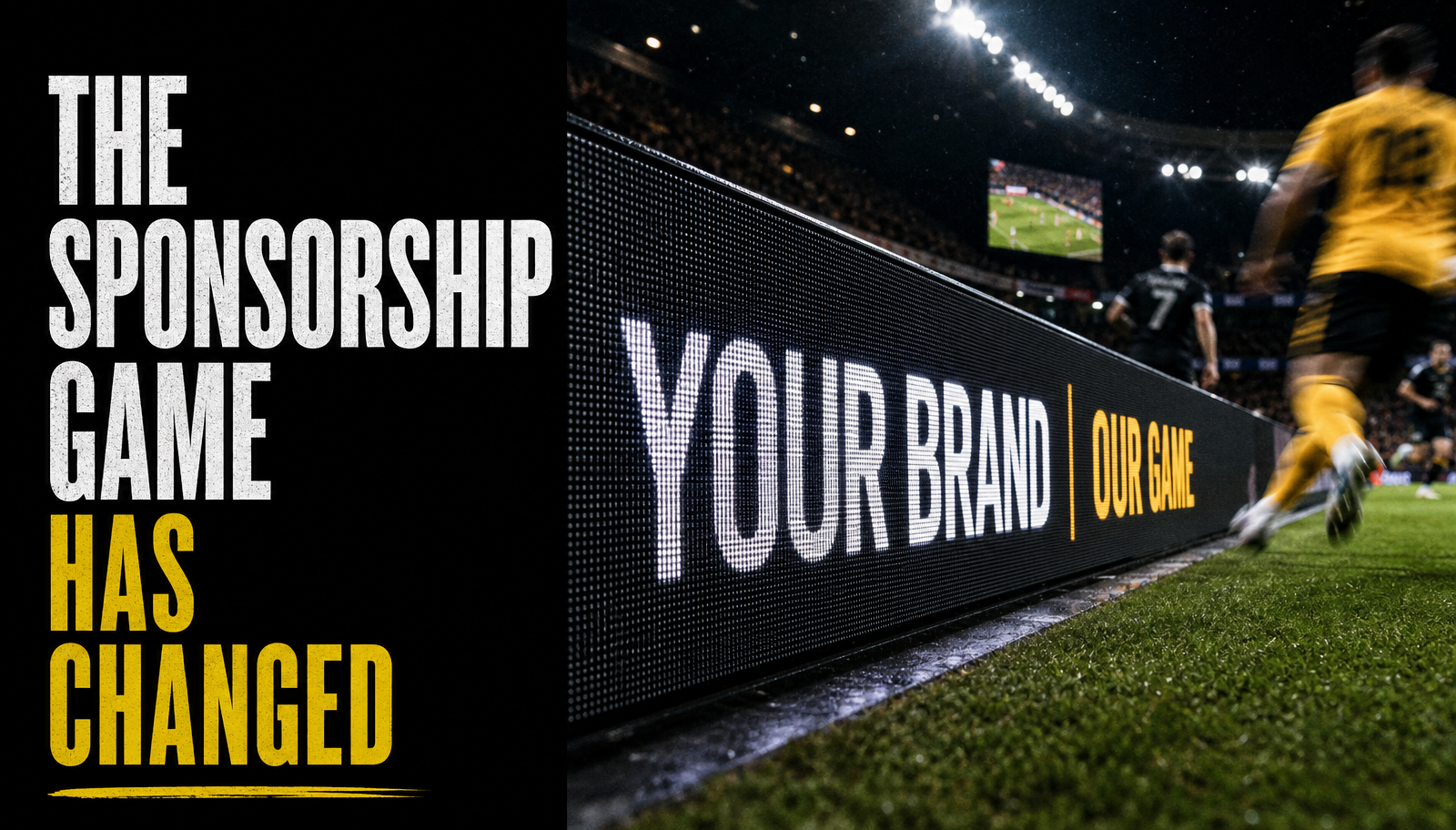
The Sponsorship Game Has Changed: What Brands Need to Know About Partnering With Football in 2026
For decades, the model for brand involvement in football was fairly straightforward. You paid a club or governing body a fee, your logo appeared on a shirt or around a stadium, and you hoped enough people noticed. The bigger the club, the more eyes on your brand, the better the deal.
That model still exists. But it is no longer enough on its own, and brands that rely on it exclusively are consistently underperforming on their investment.
The way audiences consume football has changed dramatically. The way they engage with sponsors has changed too. And the most commercially effective brand partnerships in the sport today look almost nothing like what was standard practice ten years ago.
Visibility Is Not the Same as Value
This is the single most important shift that brands entering football need to understand.
A logo on the front of a Premier League shirt will be seen by millions of people. That is genuine reach, and reach has value. But reach alone does not drive the commercial outcomes most brands are actually looking for. Sales, loyalty, brand consideration, genuine association with the values of the sport. These things come from something deeper than visibility.
Research consistently shows that supporters have increasingly sophisticated filters when it comes to sponsors. They notice which brands feel like a natural fit with their club and which ones clearly just wrote a cheque. The ones that feel forced get ignored, or worse, generate resentment.
The brands that win in football sponsorship are the ones that earn their place in the conversation, rather than simply buying a spot at the edge of it.
The Rise of the Content-Led Partnership
The most effective sponsorship deals in football right now are built around content, not just placement.
Look at how Heineken have approached their UEFA Champions League partnership over the past decade. They do not just plaster their branding around the stadium. They create campaigns built around the drama and ritual of the Champions League, tapping into fan emotion in a way that makes their name feel genuinely connected to the experience of the competition. Their "Champions" platform has run for years and consistently delivers engagement that far outstrips the basic brand visibility the deal provides.
At a club level, the same principle applies. Brands who work with clubs to co-create content, whether that is a behind-the-scenes series, a community initiative, or a product-led campaign built around player stories, get something that a perimeter board simply cannot deliver. They get authentic storytelling that supporters actually engage with.
This does not only apply at the top of the game. A regional brand partnering with a Championship or League One club has exactly the same opportunity, just at a more local scale. A well-executed content partnership with a club that has a passionate, engaged local following can deliver remarkable value for a brand that does not have the budget to compete at Premier League level.
Player-Led Deals Are Outperforming Club Deals
One of the most significant shifts in football commercial partnerships over the past five years is the move towards players as primary vehicles for brand investment, rather than clubs.
This has been turbocharged by social media. A player with two million Instagram followers and a genuinely engaged audience has a direct channel to supporters that no perimeter board can replicate. Brands have noticed.
The deals being done directly with players, separate from any club arrangement, have grown substantially. Jude Bellingham's commercial portfolio before he turned 21 was already remarkable. Bukayo Saka has brand relationships that are entirely independent of anything Arsenal facilitate. Across Europe, the pattern is the same. Kylian Mbappe's commercial operation is as sophisticated as many mid-sized companies.
What is interesting is that this is not limited to the very top tier. Players at Championship level, in the Bundesliga's lower divisions, or playing in the Eredivisie can have highly engaged social followings with a specific demographic that is genuinely attractive to certain brands. The value is in the audience fit and the authenticity of the relationship, not just the size of the following.
For brands, this creates a different set of considerations. Working with a player directly means the relationship needs to be genuine. Followers can spot an inauthentic endorsement immediately, and when they do, the damage reflects on both the player and the brand. The best player partnerships are ones where the brand fits naturally with who the player actually is.
Measuring Return Has Become Non-Negotiable
One of the biggest frustrations for brands in football sponsorship historically has been the difficulty of measuring return on investment. A shirt deal was an act of faith as much as a commercial decision. You knew your brand was getting visibility, but quantifying what that visibility was actually worth was genuinely difficult.
That is changing fast. The tools available to measure engagement, reach, sentiment, and commercial attribution have improved enormously, and sophisticated rights holders are now expected to provide detailed measurement frameworks alongside any significant deal.
Brands entering football partnerships in 2026 should be asking hard questions about measurement from the very beginning. How will success be defined? What data will be available? How does the rights holder plan to help deliver against commercial objectives, not just brand objectives?
Any partner who cannot or will not engage seriously with these questions is worth being cautious about.
The Authenticity Test
Every brand considering a football partnership should ask themselves one simple question before signing anything: does this make sense?
Does the brand's values and personality genuinely connect with the club, player, or competition in question? Will supporters see this and think it is a natural fit, or will it feel transactional?
This is not just a philosophical point. It is a commercial one. Partnerships that pass the authenticity test consistently outperform those that do not, because they earn genuine goodwill from supporters rather than being tolerated.
The brands that have built the strongest positions in football over the past decade are the ones that treated their partnerships as something to invest in and build over time, not just buy and leave.
What This Means in Practice
For any brand looking to enter or grow their presence in football, the takeaway from all of this is straightforward.
Think beyond the logo. Think about what story you want to tell, what content you can create, and how your presence in the sport can add something rather than just take up space. Find the right fit, whether that is a specific club, a specific player, or a specific competition, and build a strategy around that fit rather than just a placement plan.
And measure everything. Set clear objectives before the deal is done, agree on how success will be tracked, and hold both sides accountable to delivering against them.
Football remains one of the most powerful commercial environments in the world. The brands that understand the new rules of engagement are the ones who will get the most from it.
← Back to all articles